
Mills County Three-Day Release Window
Mills County Sheriff does not publish a three-day release view. Its linked Public Inquiry is limited to current adult records and has no release-date or release-type field. A 72-hour result must therefore be assembled from the jail record for a defined interval, not copied from a public list.
The longer window helps when an event may have occurred late Friday, over a weekend, or before staff completed an update. It also gives enough time to compare several bookings or cause numbers. Write both the starting and ending date and time.
Build a Mills 72-Hour Check
Begin with the current roster and note when it was searched. Then call Mills County Jail at 325-648-2245 to ask whether a named person remains there or left through release or transfer. Phone disclosure may be limited, so use the written process for a durable result.
- Set an exact three-day start and end time.
- List the full name, aliases, birth date, and booking or S.O. number.
- Request all releases in that range, or identify one booking.
- Ask for release time, authority, type, and public receiving-agency information.
- Match each response to its booking and criminal cause.
Use Released Last 24 Hours for a same-day event. The Mills released-inmate search covers a named person whose path is unclear.
Mills Three-Day Record Fields
The current roster shows facts about an active booking. The release record answers the three-day question. Keep those field groups separate.
| Field | Use in a 72-hour review |
|---|---|
| Name and aliases | Match the person across sources |
| Booking or S.O. number | Separate custody episodes |
| Booking timestamp | Identify when that jail episode began |
| Release timestamp | Place the exit inside or outside the window |
| Release type or authority | Explain the legal basis without guessing |
| Receiving agency | Distinguish transfer from community release |
Roster charge, bond, court, and disposition entries can help locate a case. They do not supply physical exit time. Protected details can be redacted, so ask for the public portion.
Mills Weekend Release Boundaries
A three-day request should spell out dates rather than say “over the weekend.” A Friday afternoon through Monday afternoon interval differs from three calendar dates. It may cross court, bond, and office work periods. Mills publishes no special weekend or holiday release practice, so none should be inferred.
A court may enter a bond or dismissal before the jail checks another hold. A roster may refresh after actual exit. A person may also leave Mills County Jail for another agency while still confined. Compare timestamps and custodians instead of forcing each event into one “released” label.
Request a Mills Release Log
Follow the Sheriff’s Records Division instructions. Mail the form and a self-addressed stamped envelope to P.O. Box 1497, Goldthwaite, TX 76844, or deliver it at 2111 Priddy Road. Formal report requests are not taken by phone or fax.
Ask for a release log or booking-and-release records for the exact three-day interval if such a log exists. Include names and identifiers for one person. Request booking sheets, release timestamps, authority, public transfer destinations, and release papers. Ask for electronic copies if available and a cost estimate.
Texas law requires prompt production within a reasonable time. If records cannot be produced within ten business days, the office must certify that fact and give a reasonable availability date. This is not a guaranteed day-ten deadline.
Why Mills Released Records Disappear
The vendor query includes adult records whose internal release marker is empty. Once populated, the record no longer belongs in the current list. This is strong evidence about roster scope, but it does not reveal the release event.
Across 72 hours, save each search time. A delayed refresh can shift the visible change. The Records Division timestamp, paired with the court order or receiving-agency record, is stronger proof.
The current inquiry shows the available controls.
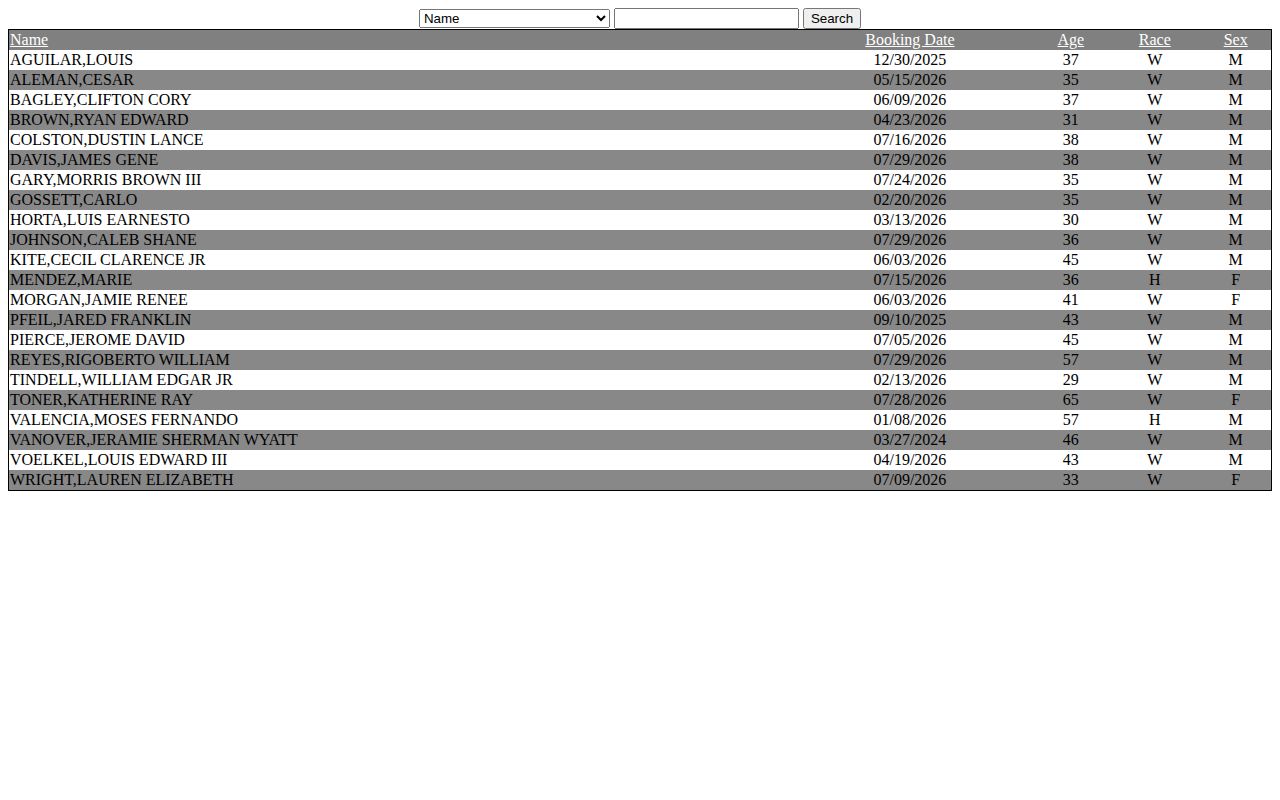
The image reflects current-search access, not a hidden three-day archive.
Route Mills Transfers Correctly
For TDCJ, search by TDCJ number, SID number, or identity details. A prison result may show a unit and projected dates. It does not turn the county exit into community release. For federal custody, use BOP and the court docket. For immigration custody, use ICE and ERO follow-up.
IVSS-Counties can provide event notices, but it disclaims use as the official record and may omit out-of-custody people. Register while custody is active when useful, then confirm any notice with the sheriff. County IVSS and TDCJ IVSS cover different custodians.
Reconcile Mills Three-Day Results
A useful three-day review preserves both positive and negative results. Record when the live roster was checked, who answered a jail call, what the written request covered, and which court causes were searched. A name can vanish because of a community release, transfer, data correction, or a temporary system issue. The record created by the agency responsible for each event deserves the most weight.
Compare the jail exit time with the court action rather than assuming they occur together. A judge may sign an order before staff verify other holds and finish processing. Conversely, an online docket may update after the person has physically left. If the release record contains an agency abbreviation, ask the Records Division to explain it and identify any public receiving agency. Do not turn an unclear code into a claimed release type.
The 35th District Court and the Mills clerk offices supply the legal case trail. Both local clerks direct researchers toward re:SearchTX, while the District Clerk keeps the district criminal papers. Search every known cause number because one disposed charge does not cancel an unrelated warrant or hold. Brown and Mills also share indigent-defense and pretrial resources, so an out-of-county office name does not make the Mills case irrelevant.
After the interval closes, retain the responsive jail record with its source date. A roster capture can document what was visible at one moment, but it cannot replace the exit timestamp. A court result can explain bond, dismissal, sentence, or commitment, but the jail record remains the direct source for when Mills custody ended. Together, those sources produce a defensible 72-hour chronology without claiming that Mills publishes a feed it does not provide.
For a broad interval request, ask whether narrowing by booking number, release date, or cause will reduce search time or cost. Do not ask staff to create a new analysis if no release log exists. Request the records as kept, and accept the custodian’s description of the available series. If part of the response is withheld, the written explanation can identify the legal basis and the route for follow-up. Keep that response with the dated request.